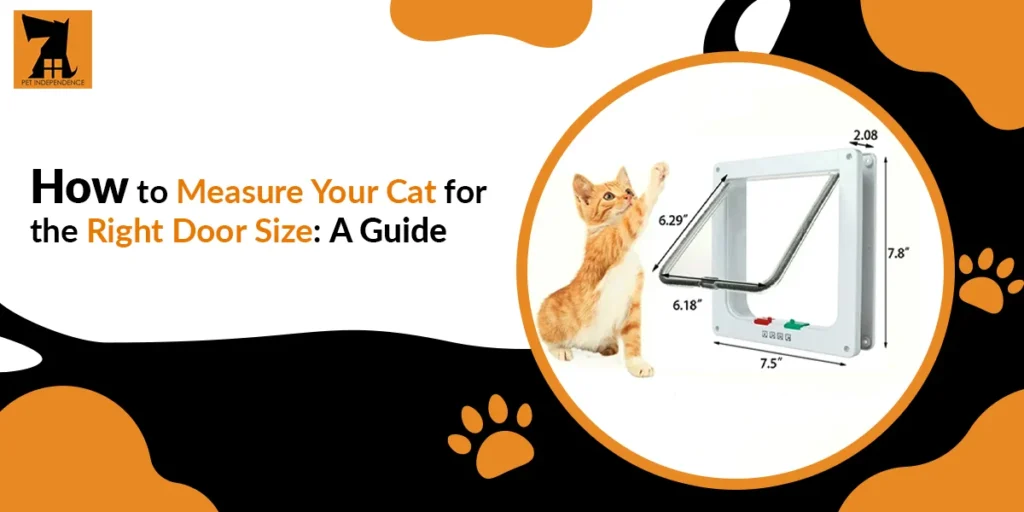
It might seem that choosing a door for your cat is an easy task. This is until you begin comparing multiple sizes, shapes, and styles. There are small, medium, and large doors, but there are others too, that include measurements that you cannot interpret. If the door is too small, your cat may feel uncomfortable; if it’s too large, you may end up doing unnecessary work.
This is why it is important to measure your cat door before getting it. In this blog, you will learn everything you need to know, from how to measure your cat and how to look for the perfect door to ensuring your pet feels comfortable using it.
Why is Measuring Important?
There are cats of different shapes and sizes, some are fluffy, some are slim, while there are round and big cats. A door that may fit one cat may feel uncomfortable for the other. A proper measurement ensures the following:
- Less anxiety for cautious or nervous cats
- Comfortable movements without your cat bending or squeezing
- Lower injury risks, especially for older or arthritic cats.
- Better for long-term use, even if your cat grows or becomes heavier
The goal here is to pick a cat door that allows them to easily pass through without any difficulties.
How to Measure Your Cat for the Door?
It is essential to properly measure your cat before you get a door for it. Below are some of the ways to do it:
1. Measure Your Cat’s Width (Step 1)
Your cat’s width determines how wide the door’s opening has to be. The easiest way to measure this is:
- Make your cat stand normally, neither sitting nor stretching.
- Wrap a soft measuring tape around the widest part of their body, mainly the chest or belly area.
- Do not pull tightly; ensure there is relevant space for their fur and comfort.
- Note down the measurement, and add 1 to 2 inches for safety.
This ensures that even long-haired or fluffy cats can pass through the door comfortably without brushing the sides all the time. For instance, if your cat is six inches wide, choose a door that has an opening of at least 7-8 inches wide.
2. Measure Your Cat’s Height (Step 2)
After this, you must measure how tall your cat is from the ground to the highest part of their shoulders. This will decide the minimum height of the door’s opening.
Here’s how you’ll do it:
- Make your cat stand up naturally.
- Put the measuring tape on the floor beside them.
- Measure them up to the shoulders and not the head, as cats naturally lower their heads to enter the door.
- Add an inch for comfort.
For instance, if your cat’s shoulder height is 10 inches, you must choose a door that’s 11 inches tall.
3. Measure Your Cat’s Length (Step 3)
This is not a necessary step, but it’s helpful to ensure the door gives more space to larger or longer-bodied cats.
- Measure your cat from the tip of the nose to the base of the tail, not the end of the tail.
- This will help you understand if your cat might feel cramped or comfortable in a tight passageway.
If your cat has a much longer torso, a larger door might be necessary, even if they are not heavy or tall.
4. Consider the Weight & Mobility of Your Cat (Step 4)
Measurements alone don’t do it; some cats may fit through a door size, but still struggle due to:
- Joint issues, arthritis, or mobility problems
- Age
- A heavier body type, even if the cat isn’t tall or long
If your cat is old or has mobility issues, it is better to choose a slightly larger door. A bigger opening means a pain-free and easier experience, this is if they need to frequently enter and exit the door.
5. Compare Your Measurements to the Door’s Opening Size (Step 5)
There are two critical pieces of information that you cannot miss on every cat door:
- The overall frame size
- The actual flap and opening size
You must focus on the flap size, as that’s the space that your cat will actually see. Compare all three measurements (length, height, and width) to ensure that doors exceed every number comfortably.
A golden rule that you can’t ignore:
You must pick a custom cat door that’s slightly bigger but never smaller. You must be aware of the fact that cats prefer space and don’t like squeezing into tight areas unless everything is one their terms.
6. Think About the Installation Height (Step 6)
After you’ve chosen the right size, installation is also important.
The bottom of the flap must be:
- About an inch or two below your cat’s belly height
- At a relevant or comfortable step-over height that your cat can easily manage
If the door is placed too high, older, small, or overweight cats might struggle to step through. But if it’s too low, there can be drafts or debris.
7. Choose the Correct Type of Cat Door (Step 7)
After your cat is measured, you must select a door style. Some popular options include the following:
- Magnetic or Locking Doors
This option is great for security and keeps unwanted animals out.
- Standard Flap Doors
These are basic plastic or flexible flaps for indoor and outdoor freedom.
- Microchip-Activated Doors
The door is one of the smartest options for homes with multiple pets or wildlife around.
- Wall-Mounted Doors
This is a useful option when doors aren’t suitable for installation.
Choose the type that matches the best for your home layout and your cat’s behavior.
Bottom Line
The first step in picking the right cat door is to measure your cat correctly. You can choose a door that your cat will use comfortably and confidently by thinking about its width, height, and comfort needs. A door that is the right size makes life easier for you and your pet, whether they are active explorers or calm indoor loungers. Your cat will be able to move around safely and without stress whenever they want if you get the right measurements and door style.
Ready to help your cat live more confidently?
Check our safe, easy-to-install cat doors from Pet Independence and find the perfect fit today!